

For Agents
13 min read
Revealing the key data trends in the latest Auckland CV data
Aucklanders awoke to new capital valuations on their properties today and after talking to a number of our customers, both private owners and property professionals, we understand that many will have questions about how a CV may be calculated, what factors contribute to a properties valuation and perhaps why a neighbouring property may have changed more dramatically than the one you own or have a professional interest in.
CV is really helpful for council to benchmark property valuation, however it’s a snapshot in time (looking in the rearview mirror). In order to understand a specific property and its market potential, there are many other factors at play both qualitatively and quantitively. The changing market conditions also have a huge impact on the valuation of a property.
Here at Relab, we’d like to take you on an interesting journey to understand the key trends in this latest CV as well as the many facets that come into play when assess a residential property.
If you are a property professional or home buyer/seller who want to have in-depth knowledge and understanding about properties, this is for you.
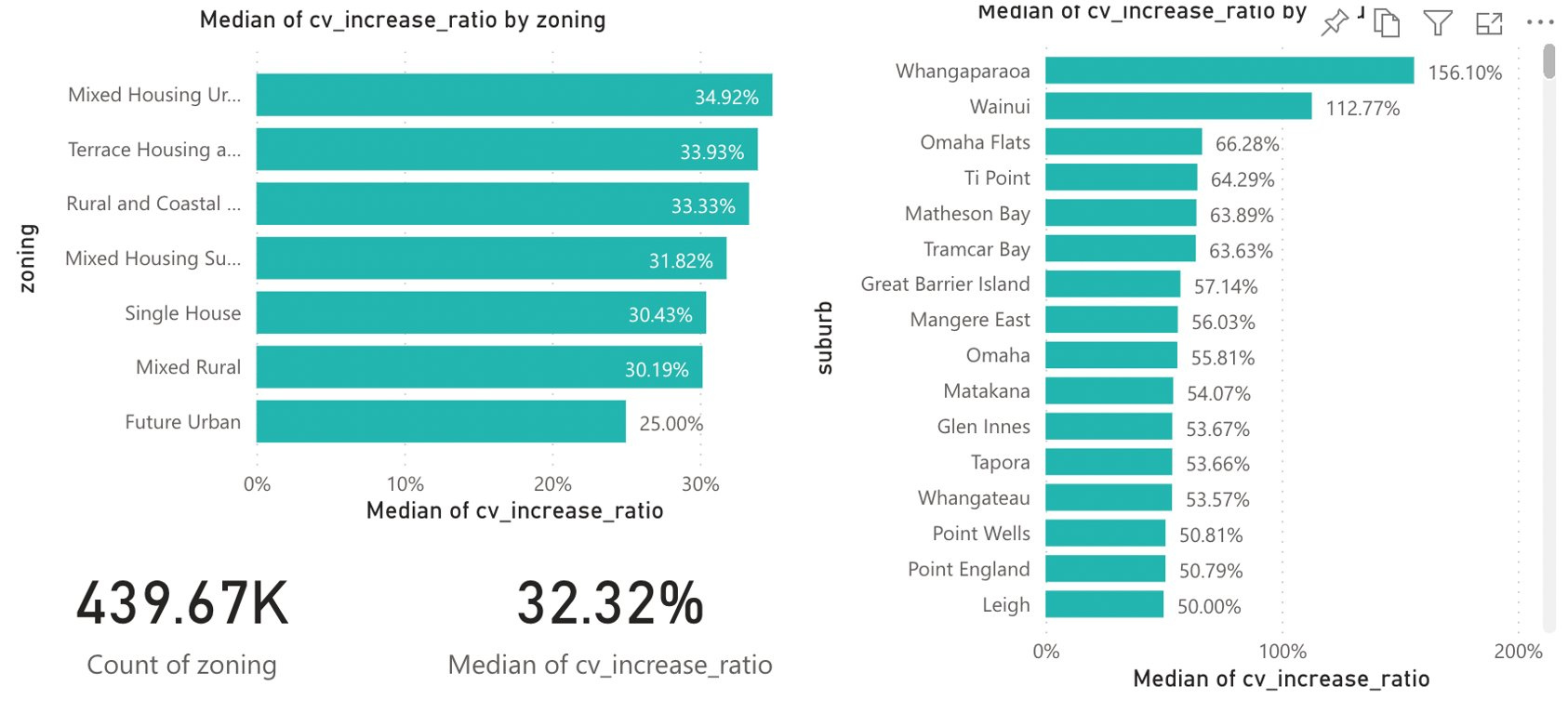
You've heard it before and we'll say it again... location, location, location. Property and its value is all about location. We've seen many interesting trends related to location in the new CV data and if we drill down further, there are some interesting trends as to what makes up the increases in various locations.
Our first example, Whangaporoa experienced a 156.1% CV uplift. This was mostly driven by 65 addresses re-zoned to Terrace Housing and Apartment Zoning near the Marina.
Our second example is Point England. Point England had a whooping 50.8% CV uplift, contributed by 1278 addresses across the suburb, with zoning spanning across THAB, Mixed Housing Suburban and Mixed housing Urban zonings. Many of which are social housing solutions aimed at providing more affordable houses for kiwi buyers.
![]()
We've made it super simple to access cv data for all our private and professional users by adding a new toggle to our mapping overlay data. You'll now find CV as a mapping toggle overlay on maps view.
![]()
Since becoming operative in late 2016, the Unitary plan has had a profound impact on Auckland and its urbanisation process.
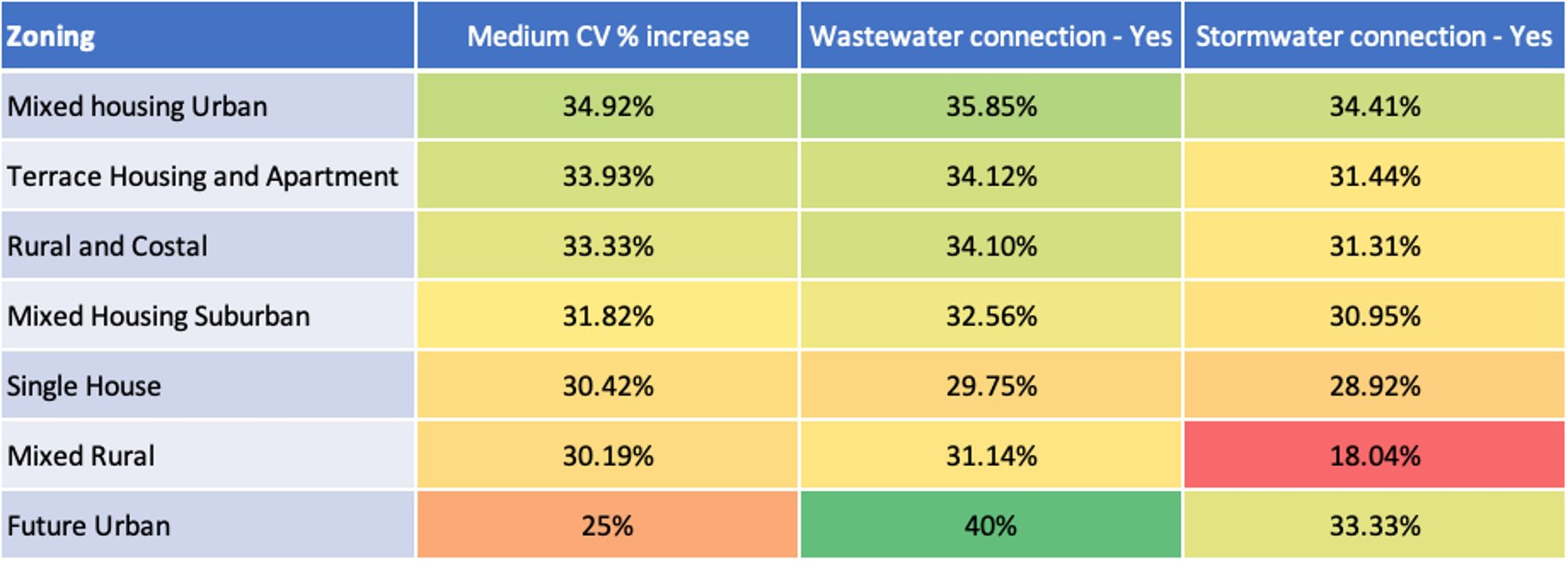
If a property’s zoning allows it to be further developed (i.e. zoning change from “single house” zoning to “residential – mixed suburban” zone), in theory its valuation should increase. Furthermore, if this address has good infrastructure connection – i.e. it has good wastewater and stormwater connection and it’s clear of any flooding zones, again in theory its valuation should increase further.
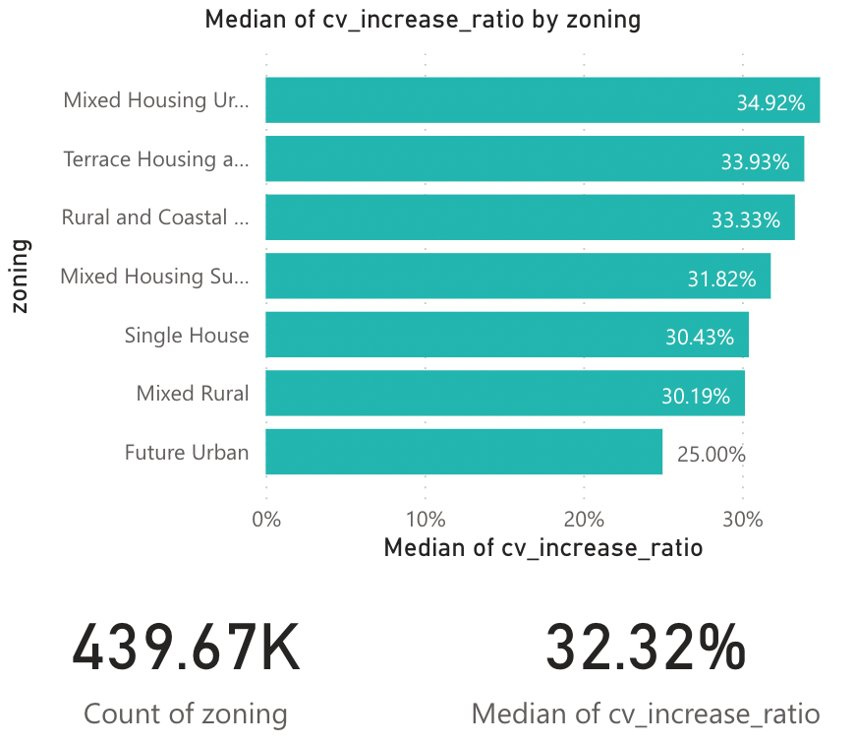
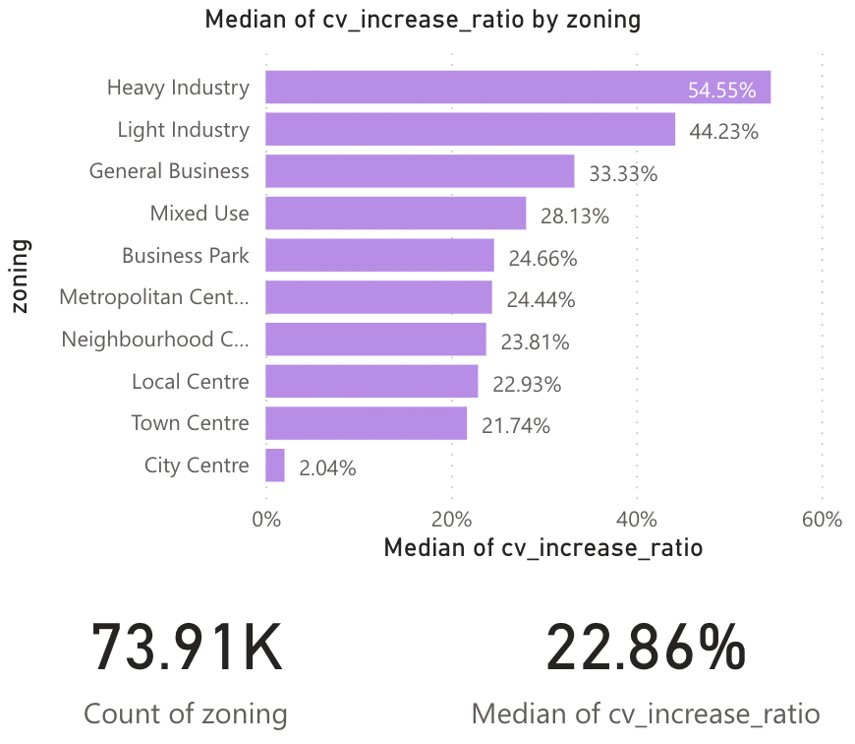
The above hypothesis needs proven, and Relab's data stacks up on this front. Overall the medium CV increase across all residential properties in Auckland is 32.3%. However, the growth is not evenly distributed, Mixed Housing Urban zone lead the growth at 34.92% while Single house zone saw a 30.4% increase in CV. For commercial properties, Heavy industry zones took the lead at 54.55% growth and Town Centre, Local Centre and Neighbourhood Centre zones saw a more modest growth between 21 ~ 24% growth.
![]()
![]()
In addition to zoning, proximity to infrastructure also has a big impact on the value of your home. Following is some analysis Relab team carried out around having access to wastewater pipe, stormwater pipe and if the site is impacted by flooding zones. Using Relab's Advanced Mapping, users can check this data
![]()
![]()
The type of property, such as house, unit or apartment has an impact on its valuation. CV is calculated based on Land Value (LV) and Improvement Value (IV). Generally speaking LV would increase overtime while IV would decrease overtime as the house/apartment ages. Relab’s new CV feature allows you to analysis the CV change on one house compared with its street and with its surrounding neighbourhood. We also breakdown the LV and the IV and show the percentage increase of each separately.
Further to property type, what type of title the property is under also has profound impact on its valuation. Freehold properties have had the biggest CV uplift compared with other property types such as crosslease, leaseholder or unit titles.
![]()
We know that the proximity to infrastructure (i.e. stormwater and wastewater connection) has a big impact on the CV on a macro level. The reason for this is the likelihood for future development given readiness of key infrastructure. Developers and home builders are more likely to choose a site with good infrastructure support and one that is ‘shovel ready’ than one that is not.
However there are many other factors to consider such as hydrology (flooding zones), if the site has previously obtained any Resource Consents (RC) for further development to take place and key features that may be outside of the property boundary. Topography is also a big one to consider as it determines how much excavation and foundations are required and could lead to complex height to boundary complications.
Your home is your castle. The build and the character if any property naturally has an impact of its valuation. High end finishings, character features such as hardwood floors or heritage architecture can help fetch a better market price. Appliances, bathrooms and you guessed it, kitchens are all things to take into consideration when assessing the valuation of a property. If you live in a street that is known for its old villas, or for it's established trees, or even for its particular period, then you can use that to your advantage and your valuation will reflect that.
Remember also, that land size, square footage and location are not all that a valuation comes down to. An older home may just as well fetch a great CV if it it well maintained. Especially in areas where land value is growing exponentially.
A properties valuation is underscored by many varying factors. Land size, location and comparable properties in the vicinity are all contributing factors to a homes CV. But don't forget that sometimes it's the more subtle things that might not be so obvious that play a bigger part on what a property may be valued at. Using reliable data sets and tools like Relab to help assess or understand a properties value can help put context around a new valuation and give you insight into the factors that contributed to that CV.
Relab can help you understand a property more in depth so you can gain more knowledge on how a property compares to its neighbouring properties. Check out the following features on Relab that will help you:
CV is really helpful for council to benchmark property valuation, however it’s a snapshot in time (looking in the rearview mirror). In order to understand a specific property and its market potential, there are many other factors at play both qualitatively and quantitively. The changing market conditions also have a huge impact on the valuation of a property.
Here at Relab, we’d like to take you on an interesting journey to understand the key trends in this latest CV as well as the many facets that come into play when assess a residential property.
If you are a property professional or home buyer/seller who want to have in-depth knowledge and understanding about properties, this is for you.
1. Location
You've heard it before and we'll say it again... location, location, location. Property and its value is all about location. We've seen many interesting trends related to location in the new CV data and if we drill down further, there are some interesting trends as to what makes up the increases in various locations.
Our first example, Whangaporoa experienced a 156.1% CV uplift. This was mostly driven by 65 addresses re-zoned to Terrace Housing and Apartment Zoning near the Marina.
Our second example is Point England. Point England had a whooping 50.8% CV uplift, contributed by 1278 addresses across the suburb, with zoning spanning across THAB, Mixed Housing Suburban and Mixed housing Urban zonings. Many of which are social housing solutions aimed at providing more affordable houses for kiwi buyers.
We've made it super simple to access cv data for all our private and professional users by adding a new toggle to our mapping overlay data. You'll now find CV as a mapping toggle overlay on maps view.
2. Zoning
Since becoming operative in late 2016, the Unitary plan has had a profound impact on Auckland and its urbanisation process.
If a property’s zoning allows it to be further developed (i.e. zoning change from “single house” zoning to “residential – mixed suburban” zone), in theory its valuation should increase. Furthermore, if this address has good infrastructure connection – i.e. it has good wastewater and stormwater connection and it’s clear of any flooding zones, again in theory its valuation should increase further.
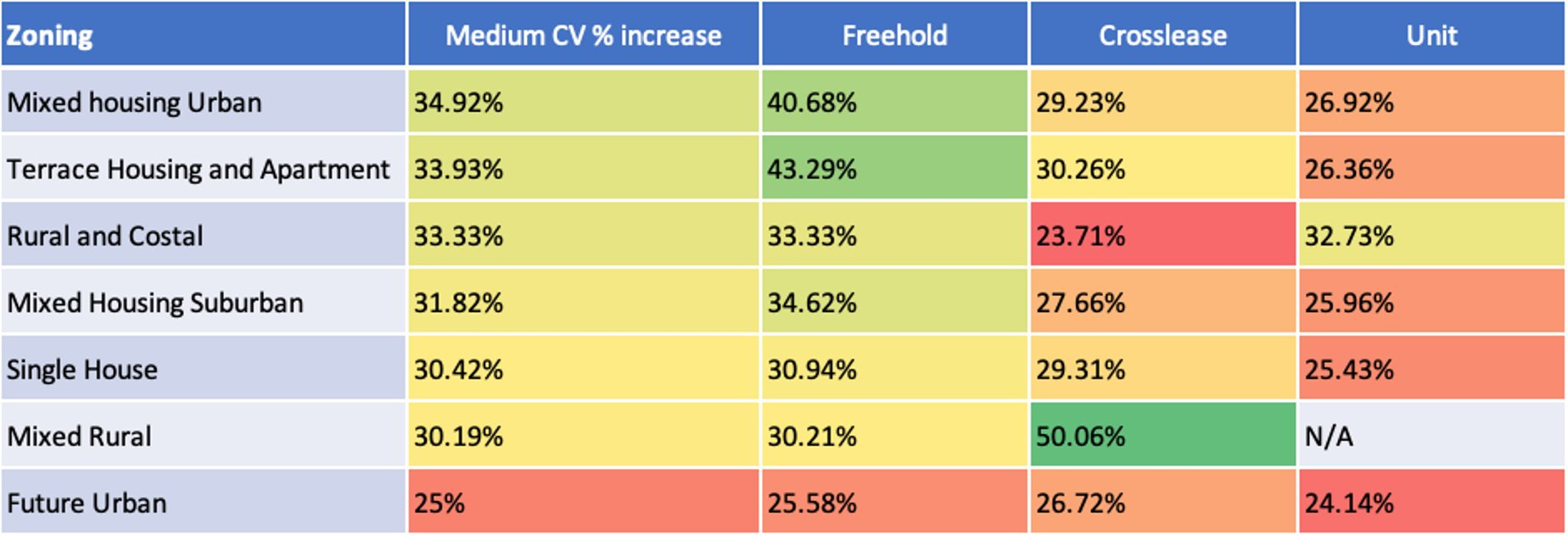
The above hypothesis needs proven, and Relab's data stacks up on this front. Overall the medium CV increase across all residential properties in Auckland is 32.3%. However, the growth is not evenly distributed, Mixed Housing Urban zone lead the growth at 34.92% while Single house zone saw a 30.4% increase in CV. For commercial properties, Heavy industry zones took the lead at 54.55% growth and Town Centre, Local Centre and Neighbourhood Centre zones saw a more modest growth between 21 ~ 24% growth.
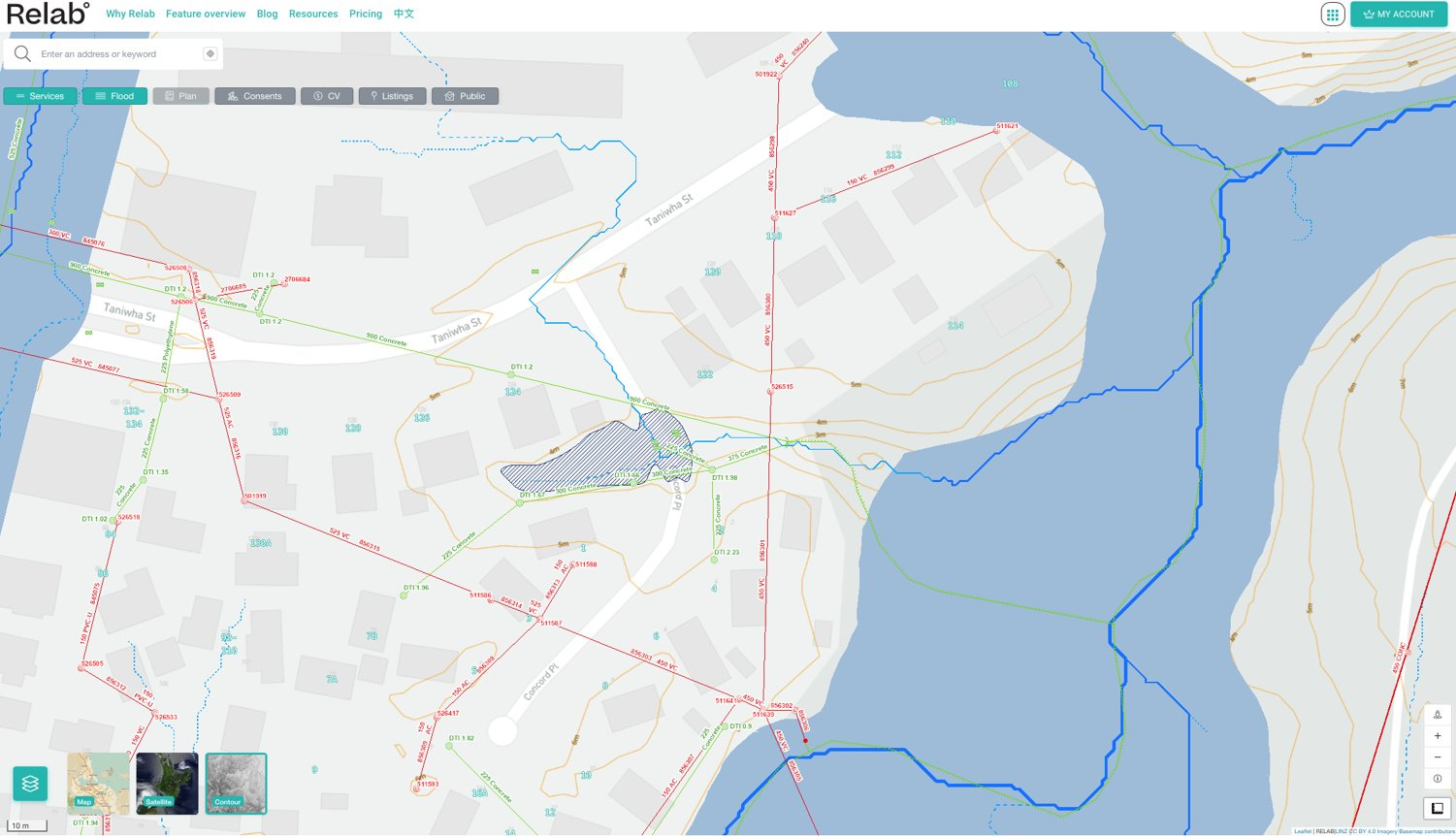
In addition to zoning, proximity to infrastructure also has a big impact on the value of your home. Following is some analysis Relab team carried out around having access to wastewater pipe, stormwater pipe and if the site is impacted by flooding zones. Using Relab's Advanced Mapping, users can check this data
3. Property type and title type
The type of property, such as house, unit or apartment has an impact on its valuation. CV is calculated based on Land Value (LV) and Improvement Value (IV). Generally speaking LV would increase overtime while IV would decrease overtime as the house/apartment ages. Relab’s new CV feature allows you to analysis the CV change on one house compared with its street and with its surrounding neighbourhood. We also breakdown the LV and the IV and show the percentage increase of each separately.
Further to property type, what type of title the property is under also has profound impact on its valuation. Freehold properties have had the biggest CV uplift compared with other property types such as crosslease, leaseholder or unit titles.
4. Does it have development potential?
We know that the proximity to infrastructure (i.e. stormwater and wastewater connection) has a big impact on the CV on a macro level. The reason for this is the likelihood for future development given readiness of key infrastructure. Developers and home builders are more likely to choose a site with good infrastructure support and one that is ‘shovel ready’ than one that is not.
However there are many other factors to consider such as hydrology (flooding zones), if the site has previously obtained any Resource Consents (RC) for further development to take place and key features that may be outside of the property boundary. Topography is also a big one to consider as it determines how much excavation and foundations are required and could lead to complex height to boundary complications.
5. Character and condition of the house
Your home is your castle. The build and the character if any property naturally has an impact of its valuation. High end finishings, character features such as hardwood floors or heritage architecture can help fetch a better market price. Appliances, bathrooms and you guessed it, kitchens are all things to take into consideration when assessing the valuation of a property. If you live in a street that is known for its old villas, or for it's established trees, or even for its particular period, then you can use that to your advantage and your valuation will reflect that.
Remember also, that land size, square footage and location are not all that a valuation comes down to. An older home may just as well fetch a great CV if it it well maintained. Especially in areas where land value is growing exponentially.
A properties valuation is underscored by many varying factors. Land size, location and comparable properties in the vicinity are all contributing factors to a homes CV. But don't forget that sometimes it's the more subtle things that might not be so obvious that play a bigger part on what a property may be valued at. Using reliable data sets and tools like Relab to help assess or understand a properties value can help put context around a new valuation and give you insight into the factors that contributed to that CV.
Relab can help you understand a property more in depth so you can gain more knowledge on how a property compares to its neighbouring properties. Check out the following features on Relab that will help you:
- Look up title types as well as any current/historic title instruments associated with the property.
- Use a handy Subdivision and Development Feasibility Calculator that can help you with your initial due diligence on any parcel of land.
- Assess any home using Relab's new CMA (comparative market analysis) tool to see how it stacks up against comparable properties locally. A CMA is a massively powerful took to use when trying to understand how a particular property will stack up valuation wise.