
Winning vendor trust in a flood zone: A guide for proactive agents
Selling a flood-affected property in Auckland was already hard. Buyers worry about safety and resale, insurers ask harder questions, and vendors are terrified their biggest asset will be "unsellable".
After the January 2023 floods – and with Plan Change 120 (PC120) updating how natural hazards are managed in the Auckland Unitary Plan – flood risk is now both a market issue and a planning issue. Vendors need an agent who is prepared, honest and calm under pressure.
This guide is for residential agents who want to win and keep vendor trust when there's a flood story in the background.
1. Do the homework before your listing presentation
Turn up knowing the property's flood status
Before you sit down with a vendor, do what most agents still don't:
- Check flood hazard maps for the property.
- Check council records for any history or flags.
- Turn up saying "I've already looked into this – here's what I found, and here's how we can manage it together."
Use Relab + Council tools together
At a minimum, do this before you walk in the door:
- Relab
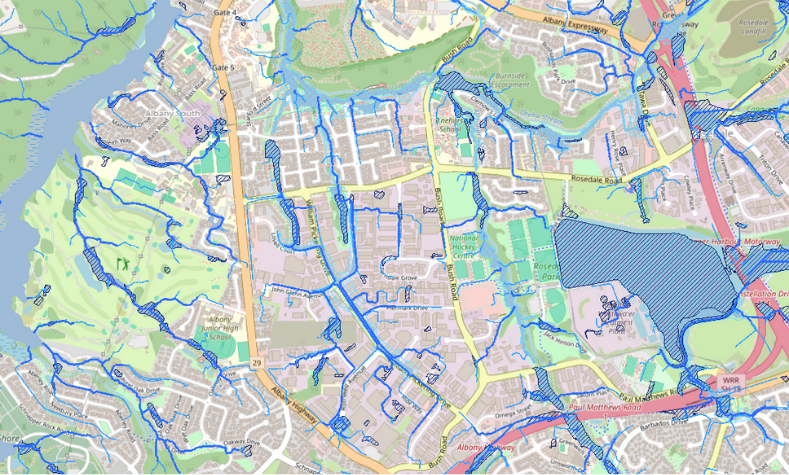
- Turn on the flood hazard overlay to see where floodplains, flood prone areas and overland flow paths intersect the property.
- Use services and contours overlays to understand stormwater/wastewater lines and how water naturally flows across the site.
- Flood Viewer (Auckland Council)
- Cross-check the same address to confirm floodplains, flood prone areas, overland flow paths and coastal inundation.
- GeoMaps (Auckland Council)
- For higher-value listings, use GeoMaps to see model age, climate assumptions, catchment areas and flows behind those layers.
- LIM & Property File
- For serious listings, pull the LIM and property file to check for historical flooding, drainage complaints or previous flood reports.
Quickly check PC120 property summary
In addition to standard flood maps, check how PC120 is proposed to apply:
- Open the PC120 map viewer.
- Search the property and open the Property Summary.
- Note:
- The proposed PC120 zone.
- Any relevant management layers (e.g. intensification).
- Any spatially identified qualifying matters relating to natural hazards (e.g. floodplain-related qualifying matters).
For some flood-affected properties, this PC120 summary is the only place where specific flood-related qualifying matters are clearly flagged at site level. That's exactly the kind of thing a serious buyer or their planner will be looking at.
2. Why PC120 changes the flood conversation
PC120 is Auckland Council's proposed update to, among other things, the Natural Hazards (E36) provisions in the Unitary Plan. In simple terms:
- It introduces a risk-based framework for natural hazards (including flooding), describing risk as Significant, Potentially tolerable or Acceptable.
- It aims to avoid significant risk to people and property and only enable development where risk is tolerable or acceptable.
- It puts more weight on floodplains and overland flow paths, and on making sure these functions are maintained.
You don't need to become a planner. But you do need to be aware that buyers, their advisers and council are all starting to view flood-affected properties through this PC120 risk lens, not just through "does it look wet?" photos.
3. Pair challenges with solutions (not excuses)
Ask the right questions, then gather evidence
Once you've done your homework, sit with the vendor and work through:
- History
- Have they ever seen water in the house, garage, yard or access?
- What happened in the Jan 2023 event specifically?
- Any insurance claims, drainage works, or council involvement?
- Remedial work
- Has the owner done anything to manage risk? (e.g. new drainage, raising floor levels, barriers, landscaping changes.)
- Are there any engineering reports or council sign-offs already?
- Council and map context
- Share a Relab map screenshot (flood hazard layer) and a council map (Flood Viewer or GeoMaps) so the vendor can see what buyers are likely to see.
- If the PC120 Property Summary shows flood-related qualifying matters, explain that this is a planning constraint, not just a perception issue.
Bring practical solutions to the table
Vendors don't want a lecture. They want a plan. Wherever you can, pair each challenge with a possible solution:
- Insurance
- Encourage them to speak to their insurer or broker now, before listing.
- If premiums or excesses are unusual, build that into disclosure and pricing expectations.
- Documentation
- Suggest commissioning, or at least collating, any existing flood risk assessments.
- If there is no report and the property is clearly in a floodplain or major overland flow path, recommend speaking to a Chartered Professional Engineer (CPEng) before going to market.
- Disclosure language
- Help the vendor understand that being upfront protects both of you.
- Offer to work with their solicitor to ensure LIM, historic flooding and risk information are disclosed in a clear, balanced way.
You're not promising miracles – you're showing that you understand the problem and have a structured way of dealing with it.
4. Build a "vendor flood pack"
A simple, organised vendor flood pack can be the difference between panic and confidence once buyers start asking questions.
What to include
At a minimum:
- Relab flood overview
- A screenshot or export from Relab showing flood hazard, services and contours for the property.
- Council maps
- Printed/PDF views from Flood Viewer (and GeoMaps for complex sites).
- PC120 summary
- A copy of the PC120 Property Summary highlighting any natural hazard-related qualifying matters.
- LIM & Property File extracts
- Any pages relating to flooding, drainage, overland flow, or categorisation reports.
- Technical reports
- Any flood assessments, engineering letters, or mitigation designs.
- Insurance info
- Current policy status, any special conditions or quotes from brokers.
How to present it
Your job is to translate all this into plain language for the vendor:
- One-page summary:
- "What the maps show"
- "What council documents say"
- "What experts (if any) have advised"
- "What this realistically means for buyers and price"
That summary becomes the backbone of your vendor conversations, buyer conversations and written disclosure.
5. Use expert resources – and know your lane
You're not a flood engineer or lawyer. Don't try to be. Your value is in spotting when expert help is needed and helping vendor and buyer access it efficiently.
When to suggest an engineer
Suggest a CPEng flood engineer when:
- Flood maps show significant floodplain overlap or a major overland flow path over the house or key access.
- The property has a council risk categorisation report (Category 2 or similar) that buyers will want to understand properly.
- The vendor is planning to subdivide or intensify and needs to know what PC120 and E36 will allow.
Make it easy to say yes
Keep a short, vetted list of:
- Flood engineers
- Planners who understand PC120 natural hazards
- Insurance brokers who regularly deal with flood-exposed properties
You're not recommending one over another – you're making it easier for vendors to take action.
6. Talk about disclosure like a professional
Position disclosure as protection, not punishment
Many vendors worry that disclosing flood risk will "kill the deal". Your job is to reframe:
- "This isn't about tanking your price – it's about avoiding future disputes."
- "If we don't disclose, the risk doesn't go away – it just comes back later as complaints, claims or legal issues."
Refer to REA guidance and case law where agents have been found in breach for failing to highlight known flood information in LIMs and council records. The principle is clear: if you know or should reasonably know about a material flood risk, you must take steps to bring it to the buyer's attention – not bury it in a document bundle.
Acknowledge PC120 without over-promising
Be honest but measured when PC120 is raised:
- You can say:
- PC120 is a proposed plan change that updates how natural hazard risk is managed.
- Under the updated framework, council is more focused on avoiding significant risk to life and property and maintaining floodplains and overland flow paths.
- Buyers should check council tools (including the PC120 map viewer) and get professional advice.
- You should not:
- Give definitive advice on what will or won't be consentable under PC120.
- Guess how PC120 will affect the property's long-term value.
You're clear about what you know, what you don't know, and where buyers should go for formal advice.
7. Turn honesty into a competitive advantage
Most agents still approach flood risk reactively – they wait for buyers to raise it, then scramble.
By contrast, you can:
- Raise the issue first, calmly and confidently.
- Show the vendor the work you've already done (Relab maps, council checks, PC120 summary).
- Lay out a clear plan for pricing, disclosure, documentation and expert input.
Vendors don't expect you to make flood risk vanish. They expect you to take it seriously, communicate clearly, and help them navigate it without surprises.
When you handle that well, you:
- Win more listings in challenging locations.
- Reduce the risk of fall-throughs and complaints.
- Build a reputation as the agent who owns the hard conversations, not just the easy ones.
Important: This article summarises practical steps for Auckland agents working with flood-affected properties in the context of PC120 natural hazard provisions. It is general information only and is not planning, legal, engineering or insurance advice.
PC120 is still progressing through the formal plan change process. For any specific property you should always:
- Check the latest Auckland Council Flood Viewer, GeoMaps, PC120 map viewer and planning maps
- Review the property's LIM and property file, and
- Recommend that vendors and buyers obtain advice from suitably qualified planners, engineers, lawyers and/or insurance professionals.