

For Agents
9 min read
PropTech and the Emergence of System Thinking
With real estate as the world's largest asset class (217 trillion USD), it's no wonder that property tech is making a solid mark in the technology space. Given that property tech startups are receiving more investment backing now than even the healthcare or telecommunications sectors, it is definitely a trend to watch. We can't hide from the fact that real estate is a massive market opportunity, and we certainly can't ignore the fact that this multi trillion-dollar industry has an enormous amount of untapped potential.
Property Tech, Proptech, or Realtech is making a giant splash on the world stage, and it's no surprise that these new platforms are becoming so popular. Property tech refers to the various platforms and tools available in the digital space that allow users to access and analyze property information and data faster, more efficiently, and with less friction. Making for smoother workflows, decreased lead times, and increased results. Proptech is also unsurprisingly linked to Fintech and blockchain technologies.
The proptech lifecycle is pretty simple. Renting, buying, managing and selling and its these four categories that make for some spectacular players in the PropTech space- especially in Australia right now. Three of the most popular technology tools for property are; property management systems, listing and advertising portals, and data and analytics platforms that allow consumers to access real-time, on-the-spot data and analytics to make smarter property decisions, faster.
![Stakeholders in Real Estate Infographic]()
Proptech Now developed a pretty comprehensive map of the PropTech landscape (see below) in Australia back in 2019. Highlighting not only the fact that there are many emerging ProTech startups popping up on the daily, but also that there are plenty more massive opportunities for new technology companies to grab a slice of a very lucrative and meaningful market.
![]()
Great property tech eliminates, or at least reduces, barriers to information, creates workflow efficiencies, and levels the playing field when it comes to accurate and timely data accessibility. According to Globe, "45% of CRE (Construction and Real Estate) teams are spending at least 15% - 25% of their time managing and organizing data. "There is a massive opportunity to deliver solutions that help optimize and refine workflows.
The housing crisis faced by 90% of the top 200 cities globally is exacerbating the need for more robust and well-thought-out solutions. We can't legislate our way out of this, and no amount of policy or rhetoric will solve our housing issue. In fact, heavy regulatory frameworks often serve to add unnecessary administrative barriers to progress.
What we do need, however, is a move to system thinking. We need to move away from a focus on the pain point – limited housing stock – how we use land and urban planning and direct our focus on how archaic systems and processes are impacting the supply issue.
Looking at system design enables decision-makers and industry professionals to create a holistic viewpoint around solutions.
Technology can play a massive role in this process. Information is currently scattered, and systems tend to be siloed in the real estate sector. A system approach utilizing property tech allows innovators to connect the dots, influence selected sections of the delivery process, communicate with industry partners better and create outcomes far in excess of current methodologies.
Taking the sum of the parts and assuming that these will automatically make up an entire, useful picture when it comes to property workflows is an outdated approach that only serves to further place the burden of a solution on analysis, rather than on the ecosystem from which the parts arise.
By understanding the points at which the system is under stress, we can adapt new ways of thinking to current problems and pain points.
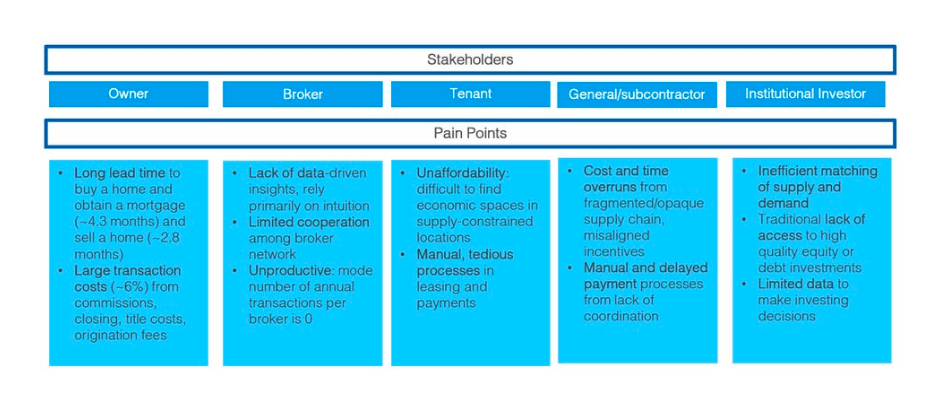
The many siloed and fragmented systems create a complex and messy workflow for property professionals to both serve their clients well and manage and grow their businesses. Our current housing crisis is one plagued by inefficiencies and the inability to access timely and accurate information and insights to better manage property decision making.
Relab aims to take a whole of market approach to unpacking pain points around real estate transactions. We look for ways to help streamline the processes surrounding the front end of the transactional journey when it comes to property. Site development, subdivision and, buying and selling real estate is where we play- with a firm handle on how this stage relates and pertains to other stages of the property lifecycle.
We aim to help real estate professionals manage their workflows, and their time, better. Equating to increased efficiency, faster turnaround times, reduced siloed systems, and ultimately an increase in successful outcomes for real estate professionals and, importantly, their clients.
Not a Relab Pro member yet? No problem! You can start for free now.
So, what is Property Tech?
Property Tech, Proptech, or Realtech is making a giant splash on the world stage, and it's no surprise that these new platforms are becoming so popular. Property tech refers to the various platforms and tools available in the digital space that allow users to access and analyze property information and data faster, more efficiently, and with less friction. Making for smoother workflows, decreased lead times, and increased results. Proptech is also unsurprisingly linked to Fintech and blockchain technologies.
The proptech lifecycle is pretty simple. Renting, buying, managing and selling and its these four categories that make for some spectacular players in the PropTech space- especially in Australia right now. Three of the most popular technology tools for property are; property management systems, listing and advertising portals, and data and analytics platforms that allow consumers to access real-time, on-the-spot data and analytics to make smarter property decisions, faster.
Proptech Now developed a pretty comprehensive map of the PropTech landscape (see below) in Australia back in 2019. Highlighting not only the fact that there are many emerging ProTech startups popping up on the daily, but also that there are plenty more massive opportunities for new technology companies to grab a slice of a very lucrative and meaningful market.

Great property tech eliminates, or at least reduces, barriers to information, creates workflow efficiencies, and levels the playing field when it comes to accurate and timely data accessibility. According to Globe, "45% of CRE (Construction and Real Estate) teams are spending at least 15% - 25% of their time managing and organizing data. "There is a massive opportunity to deliver solutions that help optimize and refine workflows.
“PropTech has its origins in the frustrations concerning the large, unmoving, illiquid asset class and the vested interests of the business which control it, plus unprecedented breakthroughs in technology — cloud computing, leaner coding, mobile devices... and much lower costs” - Steve Weikal, professor at MIT Center for Real Estate
Why does Proptech matter?
The housing crisis faced by 90% of the top 200 cities globally is exacerbating the need for more robust and well-thought-out solutions. We can't legislate our way out of this, and no amount of policy or rhetoric will solve our housing issue. In fact, heavy regulatory frameworks often serve to add unnecessary administrative barriers to progress.
What we do need, however, is a move to system thinking. We need to move away from a focus on the pain point – limited housing stock – how we use land and urban planning and direct our focus on how archaic systems and processes are impacting the supply issue.
Looking at system design enables decision-makers and industry professionals to create a holistic viewpoint around solutions.
Technology can play a massive role in this process. Information is currently scattered, and systems tend to be siloed in the real estate sector. A system approach utilizing property tech allows innovators to connect the dots, influence selected sections of the delivery process, communicate with industry partners better and create outcomes far in excess of current methodologies.
Taking the sum of the parts and assuming that these will automatically make up an entire, useful picture when it comes to property workflows is an outdated approach that only serves to further place the burden of a solution on analysis, rather than on the ecosystem from which the parts arise.
By understanding the points at which the system is under stress, we can adapt new ways of thinking to current problems and pain points.
How Relab is responding?
The many siloed and fragmented systems create a complex and messy workflow for property professionals to both serve their clients well and manage and grow their businesses. Our current housing crisis is one plagued by inefficiencies and the inability to access timely and accurate information and insights to better manage property decision making.
Relab aims to take a whole of market approach to unpacking pain points around real estate transactions. We look for ways to help streamline the processes surrounding the front end of the transactional journey when it comes to property. Site development, subdivision and, buying and selling real estate is where we play- with a firm handle on how this stage relates and pertains to other stages of the property lifecycle.
We aim to help real estate professionals manage their workflows, and their time, better. Equating to increased efficiency, faster turnaround times, reduced siloed systems, and ultimately an increase in successful outcomes for real estate professionals and, importantly, their clients.
Not a Relab Pro member yet? No problem! You can start for free now.