

For Agents
10 min read
How do you work out what a house is worth?
You might have fallen in love with that property, you know, the one with the beautiful big tree out front, the walk in wardrobe, fenced yard for the kids, wooden floors throughout, and man cave for the hubby! ... but, how do you figure out what its value is? How do you know what you should pay? And, in this market how do you work out what a fair price is?
Start by finding out what the online value estimators have to say. Their algorithms are getting better and better all the time. Take each number with a grain of salt though, as there will be factors these formulas can’t take into account. Including...
Relab has a handy property valuation feature to help you estimate where a properties value might sit in today's market. It's a good idea to look at various property valuation sites to gauge a range to work with.
Ask the real estate agent selling the home to send you the sales history for the property.
If a home has sold in the last 1-3 years it can help you to ascertain what it might be worth now – by adding an estimated amount of capital growth during that time.
You can also see a properties sales history in Relab on your property information dashboard.
![property sales history]()
Does the home have a brand new kitchen or bathroom? Plush new carpet? Tiled bathrooms? Is the quality better than average for the area? These updates will add value.
Conversely, if a home needs updating, that might lower the price compared to others in the area. Just don’t expect to deduct the full cost of the renovations.
Often, a buyer will come through a dated home and say “It’s a bit tired, it needs a new kitchen, a new bathroom, new carpet. So we’ll take $100k off the price and offer X”. Real estate values simply don't work like that though. As long as the current kitchen and bathroom are working, they have residual value.
If the current owner spent $100k on those same renovations, the home would be worth a heck of a lot more.
That's why you can’t expect to subtract your entire ‘future renovation cost’ when determining market value.
What sort of yield would this property achieve if it was rented out?
If the rental appraisal is $500 per week and you think the property might sell around $600k, that’s a 4.3% yield
Yield formula: $500 (rent per week) x 52 (weeks per year) /$600k (purchase price) x 100 = 4.3%
This information is not just for investors. Similar properties in the same area should sell with similar yields.
Look at the numbers and ask, how does this yield compare to other properties on the market? How does it compare to other properties that have sold recently? Will the rent cover the mortgage interest if you need to travel overseas or suddenly need to move to a different city for work?
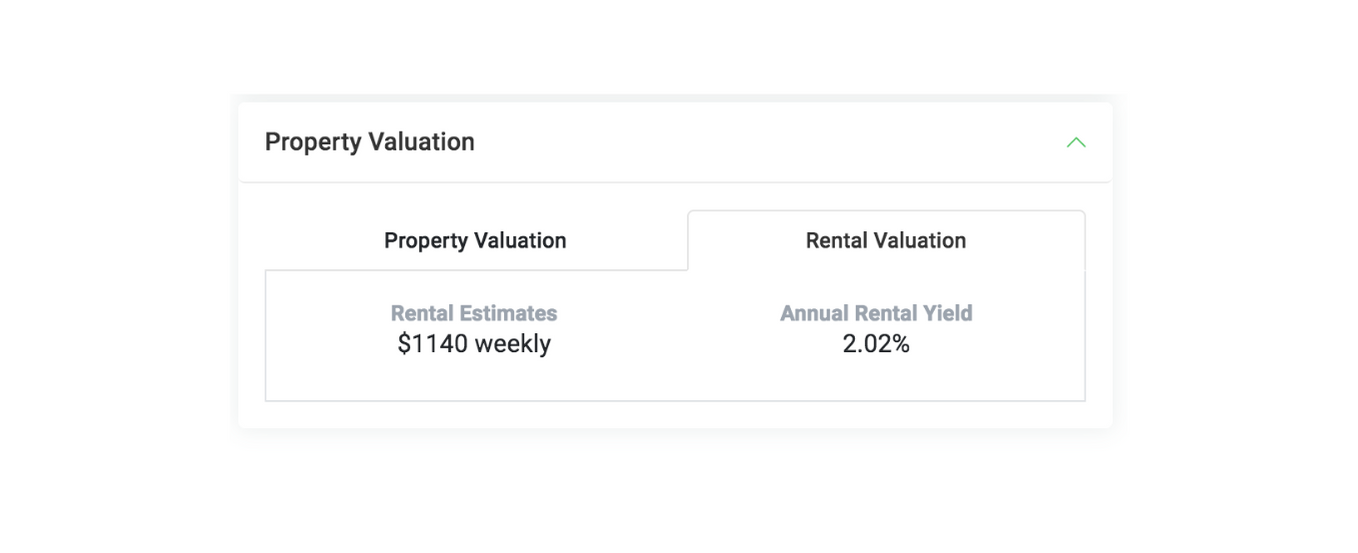
Relab also has a handy rental appraisal feature including estimated weekly rental and annual yield that'll make your life so much easier.
![rental estimate]()
Comparing a property with recent similar sales is still the best way to work out market value. Ask the agent you are working with for a list of similar homes that have sold in the last 6 months. The more recent, the better. Or check Relab's handy Comparative Market Analysis (CMA) feature.
Have you seen those other houses? Can you drive past them, or at least look up photos online? How do they compare with the property you are looking at? Consider differences in land area, floor area and location, too. Not just condition.
Remember – there is no one price for any home. Every property is worth different amounts to different people, depending on what your needs, motivations and financial situation is. Only you know what you can spend, only you know what you need most in a home and only you know what that house means to you personally.
With any property you are considering, start by formulating a value range (eg. $550 – 650k) and then determine your 'walk-away price', which is the maximum amount you are willing to pay in a competitive situation. Know what you can afford, what you can borrow and what price you are happy to walk away from the deal at.
And remember, it's always advised to take the advice of your team of property professionals! Consult your lawyer, accountant and agent on what your best move is.
You might also like:
Your home buyers wish list; are you prepared for your next open home?
Your 3 step, ultimate plan to downsizing your home
How is the New Zealand Property Market fairing this year so far?
1. Assess the potential value on home valuation websites
Start by finding out what the online value estimators have to say. Their algorithms are getting better and better all the time. Take each number with a grain of salt though, as there will be factors these formulas can’t take into account. Including...
- The condition of the property. Is it average for the area? Below average? Or fully renovated?
- Is there any major work required? Like re-piling, re-wiring, or re-roofing?
- How convenient is the layout of the home? Is it light and spacious? Or dark and disjointed?
Relab has a handy property valuation feature to help you estimate where a properties value might sit in today's market. It's a good idea to look at various property valuation sites to gauge a range to work with.
2. Find out what the property last sold for
Ask the real estate agent selling the home to send you the sales history for the property.
If a home has sold in the last 1-3 years it can help you to ascertain what it might be worth now – by adding an estimated amount of capital growth during that time.
You can also see a properties sales history in Relab on your property information dashboard.

3. What improvements have been made?
Does the home have a brand new kitchen or bathroom? Plush new carpet? Tiled bathrooms? Is the quality better than average for the area? These updates will add value.
Conversely, if a home needs updating, that might lower the price compared to others in the area. Just don’t expect to deduct the full cost of the renovations.
Often, a buyer will come through a dated home and say “It’s a bit tired, it needs a new kitchen, a new bathroom, new carpet. So we’ll take $100k off the price and offer X”. Real estate values simply don't work like that though. As long as the current kitchen and bathroom are working, they have residual value.
If the current owner spent $100k on those same renovations, the home would be worth a heck of a lot more.
That's why you can’t expect to subtract your entire ‘future renovation cost’ when determining market value.
4. Assess the current rent (or rental appraisal)
What sort of yield would this property achieve if it was rented out?
If the rental appraisal is $500 per week and you think the property might sell around $600k, that’s a 4.3% yield
Yield formula: $500 (rent per week) x 52 (weeks per year) /$600k (purchase price) x 100 = 4.3%
This information is not just for investors. Similar properties in the same area should sell with similar yields.
Look at the numbers and ask, how does this yield compare to other properties on the market? How does it compare to other properties that have sold recently? Will the rent cover the mortgage interest if you need to travel overseas or suddenly need to move to a different city for work?
Relab also has a handy rental appraisal feature including estimated weekly rental and annual yield that'll make your life so much easier.
5. Look at comparable sales in the area
Comparing a property with recent similar sales is still the best way to work out market value. Ask the agent you are working with for a list of similar homes that have sold in the last 6 months. The more recent, the better. Or check Relab's handy Comparative Market Analysis (CMA) feature.
Have you seen those other houses? Can you drive past them, or at least look up photos online? How do they compare with the property you are looking at? Consider differences in land area, floor area and location, too. Not just condition.
Now you can decide on a price range that you're comfortable with …
Remember – there is no one price for any home. Every property is worth different amounts to different people, depending on what your needs, motivations and financial situation is. Only you know what you can spend, only you know what you need most in a home and only you know what that house means to you personally.
With any property you are considering, start by formulating a value range (eg. $550 – 650k) and then determine your 'walk-away price', which is the maximum amount you are willing to pay in a competitive situation. Know what you can afford, what you can borrow and what price you are happy to walk away from the deal at.
And remember, it's always advised to take the advice of your team of property professionals! Consult your lawyer, accountant and agent on what your best move is.
You might also like:
Your home buyers wish list; are you prepared for your next open home?
Your 3 step, ultimate plan to downsizing your home
How is the New Zealand Property Market fairing this year so far?