

For Buyers
17 min read
What are the benefits of property management for your rental?
Not every rental business requires a property manager. That being said, whether you do or don't require one depends on the multitude of factors: number of properties, experience in Real Estate, where your property is located, or your priorities!
However, the right property manager can be life-changing and help to significantly increase the efficiency of your enterprise. Whether or not to hire a person to manage your investment is a big decision – and one that requires some thorough research to ensure you, or a property professional, is the right person for the job.
Relab dives into the pros and cons of hiring a property manager for your investment properties.
A property manager's job description is to act as an intermediary between you (the landlord or rental property owner) and your tenants. Depending on the extent of the contract you sign with your chosen property management company, property managers services can extend to the following:
![property manager duties chart]()
There are many pros to hiring a property manager; depending on the number of investment properties you have and your other commitments, you might want to consider these things.
A property manager is likely hugely experienced in the management of homes, but also people! So, depending on how long they've been involved in the industry, they should have a largely defined process.
Many property managers are licensed real estate agents, meaning that they are armed with an education that informs them of the multiple laws and complexities of the industry. This education also ensures that a property manager knows how to best price homes based on several factors!
Property managers have also dealt with tenant disputes, flatmate changes, broken breaks, evictions, and more in their time. These situations can often be overwhelming for a general landlord, especially those new to managing property and tenants! But, generally speaking, property management companies have handled these issues and identified the best ways to find a resolution - minimising the stress that landlords bear when situations go south.
Property managers will have also studied fair housing laws and local laws affecting landlords and tenants! Many of these laws are specific and can be lengthy, so a law may be easily broken without reading through and understanding them.
As the Government appears to be adding additional regulations to landlords' responsibilities, growing numbers are turning to property managers rather than opting to do it themselves.
Managing a property is a time-consuming task. You will find yourself on call 24/7, so be prepared to have your personal time disrupted to tend to a maintenance issue. Not only are you responsible for managing these, but also for payments or lease issues.
Hiring a property manager to manage these tasks will free up a lot of your time. Taking care of damaged windows or electrical issues will no longer be your task. You'll be able to get on living and enjoying your life without the constant worry of being interrupted.
Hiring a property manager can often minimise stress for landlords – taking the piles of paperwork and tenant disputes off your hands! Rest assured, your property manager will take on the administration, handle any issues, and only contact you for emergencies.
Hiring a property manager also allows you to own a rental property outside of where you're physically living. When you manage your own property, it's helpful to be close to the site so you can respond quickly to maintenance requests, manage inspections or perform walkthroughs. Hiring a property manager means you can live elsewhere while knowing you have someone on hand to take on these in-person duties.
One of the greatest difficulties about managing a property is dealing with maintenance issues. Maintenance issues may come up anytime and can often be a bigger problem than you are prepared to deal with.
Property managers are equipped to deal with maintenance issues quickly, typically having multiple vendors on call who can tackle the job. This spares you the inconvenience of researching different tradespeople and deciding who might be best suited to the job. A property management company most likely has a dedicated maintenance manager or a conact who is experienced at managing maintenance requirements.
The biggest known obstacle that deters people from opting to hire a property manager is the cost! Property management is a paid service, and the investment can often prevent people from going ahead with a manager.
Most property management companies will charge a monthly fee, typically a percentage of the month's rent. Additionally, there might be a leasing fee. This fee goes toward the advertising of your property, such as listings, photos, and videography, etc. Keep watch for hidden costs such as additional cancellation fees, maintenance fees, or renewals fees. Keep an eye out for these fees, read the fine print and ask the company for pricing transparency.
There are multiple business models out there. And luckily, with the proliferation of social media, many property management companies have been forced to be more transparent with pricing to avoid facing scrutiny online.
The key is to do your research and ensure that the money spent gives you what you need – the assurance that your property is being best kept while minimising stress for you as the landlord.
Some owners choose and prefer to be involved in every decision that surrounds the management of their property. However, if you like to get stuck in, it can be challenging to hand over the reins to a property manager who typically works best with a hands-off approach.
Property managers likely won't contact you regarding minor tenant issues, maintenance issues, or other trivial matters. And that is why you pay them! Property managers are well-equipped to handle these issues and are trained in the best way to do so.
When a property is your investment, it can be challenging not to want to be involved heavily in its runnings. Quite often, this property is your nest egg! However, it is discouraged to micromanage a property manager, as it often makes their job more challenging. If you need to be hands-on at all times, perhaps self-managing is a better fit for you.
Of course, there is the option to find a middle ground – seeking a good balance between managing your property yourself and letting a professional do it. For example, you could use an agent to source and interview tenants, ask them to handle the logistics of the paperwork, but then handle the ongoing management of the property yourself.
Owning and leasing a property can be highly profitable, but finding and managing tenants to help pay the bills can be demanding. Even the easiest of tenants will invariably come with requests, and attending to these queries and maintenance can be both stressful and time-consuming.
As a rental property owner, you have three choices when managing the day-to-day operations of your property. First, you can choose to self-manage the property, meaning you manage maintenance, repairs, tenant contracts, rent payments, and the multitude of tentant-landlord relationship layers.
You can also choose to hire a third-party professional to look after the property for you. Lastly, you could find a balance between hiring a professional to manage some aspects of the business while you handle the others. Or try a service like MyRent, which helps with many aspects of property management.
Although there is no right or wrong answer, there could be a choice that best suits lifestyle or skillset! For example, your individual circumstances or knowledge may make self-management seem impossible, or perhaps you firmly feel that passing the torch to a professional would save you time and stress.
Decide on your priorities and how you wish to spend your time best. Remember too; time is money!
You might also like:
10 Best podcasts for property investors
5 Key features of a great investment property
However, the right property manager can be life-changing and help to significantly increase the efficiency of your enterprise. Whether or not to hire a person to manage your investment is a big decision – and one that requires some thorough research to ensure you, or a property professional, is the right person for the job.
Relab dives into the pros and cons of hiring a property manager for your investment properties.
What does a property manager do? Property Management duties and responsibilities
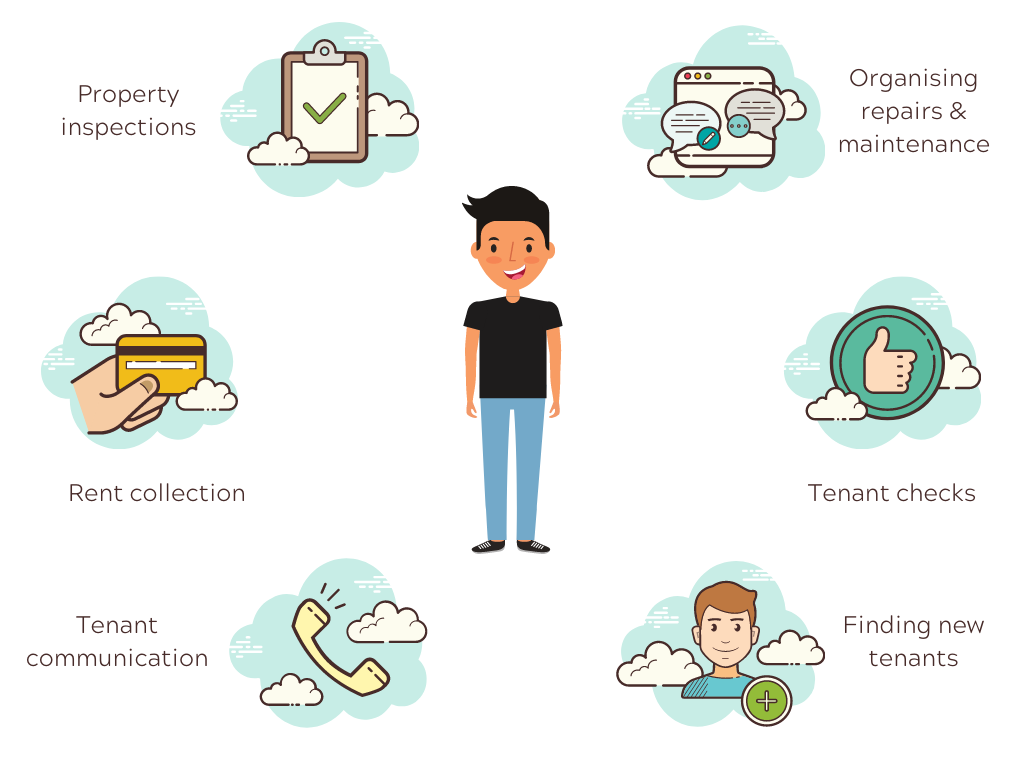
A property manager's job description is to act as an intermediary between you (the landlord or rental property owner) and your tenants. Depending on the extent of the contract you sign with your chosen property management company, property managers services can extend to the following:
- Finding new tenants
- Assessing the suitability of potential tenants, including performing checks (e.g. references)
- Collecting regular rental payments from tenants
- Carrying out property inspections, maintaining a condition report
- Communicating and managing tenants – answering queries, booking tradespeople for repairs, and generally acting as an intermediary for landlords and tenants.
- Staying relevant: having sound knowledge of the local area of your property is crucial.
- Continuous development and education around new property and tenancy laws.
Pros of Property Management
There are many pros to hiring a property manager; depending on the number of investment properties you have and your other commitments, you might want to consider these things.
Experience in the industry
A property manager is likely hugely experienced in the management of homes, but also people! So, depending on how long they've been involved in the industry, they should have a largely defined process.
Many property managers are licensed real estate agents, meaning that they are armed with an education that informs them of the multiple laws and complexities of the industry. This education also ensures that a property manager knows how to best price homes based on several factors!
Property managers have also dealt with tenant disputes, flatmate changes, broken breaks, evictions, and more in their time. These situations can often be overwhelming for a general landlord, especially those new to managing property and tenants! But, generally speaking, property management companies have handled these issues and identified the best ways to find a resolution - minimising the stress that landlords bear when situations go south.
Property managers will have also studied fair housing laws and local laws affecting landlords and tenants! Many of these laws are specific and can be lengthy, so a law may be easily broken without reading through and understanding them.
As the Government appears to be adding additional regulations to landlords' responsibilities, growing numbers are turning to property managers rather than opting to do it themselves.
Freeing up your time
Managing a property is a time-consuming task. You will find yourself on call 24/7, so be prepared to have your personal time disrupted to tend to a maintenance issue. Not only are you responsible for managing these, but also for payments or lease issues.
Hiring a property manager to manage these tasks will free up a lot of your time. Taking care of damaged windows or electrical issues will no longer be your task. You'll be able to get on living and enjoying your life without the constant worry of being interrupted.
Hiring a property manager can often minimise stress for landlords – taking the piles of paperwork and tenant disputes off your hands! Rest assured, your property manager will take on the administration, handle any issues, and only contact you for emergencies.
Hiring a property manager also allows you to own a rental property outside of where you're physically living. When you manage your own property, it's helpful to be close to the site so you can respond quickly to maintenance requests, manage inspections or perform walkthroughs. Hiring a property manager means you can live elsewhere while knowing you have someone on hand to take on these in-person duties.
Improved maintenance response time
One of the greatest difficulties about managing a property is dealing with maintenance issues. Maintenance issues may come up anytime and can often be a bigger problem than you are prepared to deal with.
Property managers are equipped to deal with maintenance issues quickly, typically having multiple vendors on call who can tackle the job. This spares you the inconvenience of researching different tradespeople and deciding who might be best suited to the job. A property management company most likely has a dedicated maintenance manager or a conact who is experienced at managing maintenance requirements.
Cons of hiring a property manager
Expense - What does a Property Manager cost?
The biggest known obstacle that deters people from opting to hire a property manager is the cost! Property management is a paid service, and the investment can often prevent people from going ahead with a manager.
Most property management companies will charge a monthly fee, typically a percentage of the month's rent. Additionally, there might be a leasing fee. This fee goes toward the advertising of your property, such as listings, photos, and videography, etc. Keep watch for hidden costs such as additional cancellation fees, maintenance fees, or renewals fees. Keep an eye out for these fees, read the fine print and ask the company for pricing transparency.
There are multiple business models out there. And luckily, with the proliferation of social media, many property management companies have been forced to be more transparent with pricing to avoid facing scrutiny online.
The key is to do your research and ensure that the money spent gives you what you need – the assurance that your property is being best kept while minimising stress for you as the landlord.
Lack of hands on involvement
Some owners choose and prefer to be involved in every decision that surrounds the management of their property. However, if you like to get stuck in, it can be challenging to hand over the reins to a property manager who typically works best with a hands-off approach.
Property managers likely won't contact you regarding minor tenant issues, maintenance issues, or other trivial matters. And that is why you pay them! Property managers are well-equipped to handle these issues and are trained in the best way to do so.
When a property is your investment, it can be challenging not to want to be involved heavily in its runnings. Quite often, this property is your nest egg! However, it is discouraged to micromanage a property manager, as it often makes their job more challenging. If you need to be hands-on at all times, perhaps self-managing is a better fit for you.
Of course, there is the option to find a middle ground – seeking a good balance between managing your property yourself and letting a professional do it. For example, you could use an agent to source and interview tenants, ask them to handle the logistics of the paperwork, but then handle the ongoing management of the property yourself.
So, should you hire a property manager?
Owning and leasing a property can be highly profitable, but finding and managing tenants to help pay the bills can be demanding. Even the easiest of tenants will invariably come with requests, and attending to these queries and maintenance can be both stressful and time-consuming.
As a rental property owner, you have three choices when managing the day-to-day operations of your property. First, you can choose to self-manage the property, meaning you manage maintenance, repairs, tenant contracts, rent payments, and the multitude of tentant-landlord relationship layers.
You can also choose to hire a third-party professional to look after the property for you. Lastly, you could find a balance between hiring a professional to manage some aspects of the business while you handle the others. Or try a service like MyRent, which helps with many aspects of property management.
Although there is no right or wrong answer, there could be a choice that best suits lifestyle or skillset! For example, your individual circumstances or knowledge may make self-management seem impossible, or perhaps you firmly feel that passing the torch to a professional would save you time and stress.
Decide on your priorities and how you wish to spend your time best. Remember too; time is money!
You might also like:
10 Best podcasts for property investors
5 Key features of a great investment property