

Starting a Real Estate blog, why you should have one and how do you start one?
I’ve spent a good deal of my career devising strategies to help people running their own businesses grow! Real Estate is no different. As a real estate agent you want people to know who you are, come to your site and ultimately convert to being a client. But, how do you attract highly relevant visitors to your website? How do you entice people to want to click through and learn a bit more about you?
You serve them up great content that get them to click through... commonly known as content marketing.
But, it’s hard to know where to start and sometimes you just want someone to spell out for you what all this blogging and content marketing business is all about! So, we're here to help you!
We’ll cover what exactly content marketing for real estate agents is, how a blog can help you grow your audience, and ultimately your business, and how you can get started.
Let’s go!
One of the strategies you can use when trying to get more traffic to your Real Estate site is content marketing.
Content marketing means to offer advice, education or entertainment to an audience in the hopes of them becoming interested in your particular brand, then hopefully they go on to becoming a client or customer – and, ultimately a fan or evangelist. Which means, both repeat business and referrals for you as a Real Estate Agent!
In Real Estate, content marketing is about writing great content (blog posts) that first attract the right audience… then content that inspires and educates… before moving on to delivering content that sits in the consideration, then decision making stages of their decision making process or journey.
Loosely speaking, the buyer journey looks something like this when someone chooses a Real Estate Agent.
Using your blog to drive traffic to your website to get more clients means writing content that flows through all stages of their buyer journey.
The main thing to remember with content marketing is to not hit your audience with the hard sell first!
You have to build up their trust in you as a brand. You want to make sure you are solving their problems. And building rapport. Then, when they are ready to make a decision, you’ll be right there waiting.
A blog is simply a place where you can regularly write medium length articles or “posts” on specific topics of interest to the audience you want to attract.
Your Real Estate blog is a page on your website that will offer inspiration, education and entertainment for your clients and your potential clients!
Great real estate blog posts are typically between 600-1200 words long. Google favors longer content for search results as a rule of thumb. This just means that your post will be clicked on more than someone else's.
The use of proper structure for your headers and content enables search engines to scan (crawl) your content more easily. Meaning you have a higher chance of ranking for a particular keyword in the search engine results.
So, you’ve probably heard about SEO (search engine optimization) and know that when you’re writing a blog post it’s important to make sure your structure is laid out in line with best practice so that you keep on Google’s good side.
In a nutshell, when writing a blog post think about these three things:
One of the best pieces of advice I can give you is to make sure your posts have plenty of breathing space… or whitespace…
And remember what sort of device they might be on… a lot of your visitors will be reading your content on a phone! Or an ipad…
Visitors won’t be put off as soon as they hit your page. A wall of words is really off putting. And a well laid out page will entice the reader to move from section to section. Which brings me to my next point.
People tend to skim read blog posts. Jumping from bit to bit… Seeking out the info that they have searched for. Think about when you read the title for this blog post. What did you want to get out of reading this? You probably skimmed down through the sections picking out the best bits that were the most applicable to you, right?
Readers want to be able to easily get value from a piece of writing. They want to be able to jump and skip along and grab snippets of information.
Make sure you lay out your words into snippets.
Easily digestible pieces of gold that your reader can grab and store away!
Google loves a good header or two! Great SEO means that your blog structure is broken down into a handful of easily readable and easily crawled sections. Headers help both the reader and Google make sense of your content.
The minimum I recommend are:
Title – The main topic of your post and how you will get your reader to click… this also has your keyword or key phrase in it
Subtitle – Optional – creates interest or intros the subject
H2 Header – Main header topics – I use bold for these as well
H3 Header– Sub headers within H2 sections where you want to tease out more info on a tip.
![Blog post structure graphic]()
It’s so, so important and I can’t emphasize this enough, that you find your unique voice.
Your readers will come to know your voice and know what to expect. It’s your brand. Your personality.
It’s what will set you apart from other salespeople.
Show your personality. Afterall, they are looking to hire someone they gel with!
One of the absolute best examples of a real estate blog I've come across lately is Michael Clarke and Cherie Hunmel's blog.
Beautifully streamlined. On topic for homeowners. Lots of white space! Full of personal touches (personality!) and a really nice mix of topics.
![Starting a Real Estate blog, why you should have one and how do you start one?]()
First up you want to do a bit of research about what your ideal audience is looking for.
If you want to write about say, staging your home for sale… you can start by searching a free tool like UberSuggest or even Google or Pinterest with a few phrases that you think people might search for.
Like…
How do I stage my home?
Tips for presenting my home for sale
Best ways to stage my house
Then, look to see the words or phrases that surround these searches… you might find a particular niche or sub topic that better suits your brand and style.
When you type in your search phrase you’ll also get a list of recent searches that come up as you type.
This is SUPER HANDY!
![Google search results]()
Also, at the bottom of the search page you’ll find related searches… pay attention to these!
All great info for your keyword research.
![Starting a Real Estate blog, why you should have one and how do you start one?]()
Pick your keywords and keep a list of alternative keyphrases – this will come in handy for promoting your blog post, especially if you use more than one keyphrase in your article.
Next, you want to map out your post.
Write your draft in Google Docs or a similar program. Then cut and paste it into your blogging platform, whatever that may be. I love Wordpress.
Whew ! That's a lot to cover... but hopefully we have given you a wee insight into how content marketing, and in particular blog writing can give you a competitive edge when marketing your real estate brand online. If you want a more in depth step by step guide on how to start a blog, grab this free guide here.
Have you recently started your real estate blog?
We'd L💛 VE to see it!
You serve them up great content that get them to click through... commonly known as content marketing.
But, it’s hard to know where to start and sometimes you just want someone to spell out for you what all this blogging and content marketing business is all about! So, we're here to help you!
We’ll cover what exactly content marketing for real estate agents is, how a blog can help you grow your audience, and ultimately your business, and how you can get started.
Let’s go!
What is content marketing?
One of the strategies you can use when trying to get more traffic to your Real Estate site is content marketing.
Content marketing means to offer advice, education or entertainment to an audience in the hopes of them becoming interested in your particular brand, then hopefully they go on to becoming a client or customer – and, ultimately a fan or evangelist. Which means, both repeat business and referrals for you as a Real Estate Agent!
In Real Estate, content marketing is about writing great content (blog posts) that first attract the right audience… then content that inspires and educates… before moving on to delivering content that sits in the consideration, then decision making stages of their decision making process or journey.
Loosely speaking, the buyer journey looks something like this when someone chooses a Real Estate Agent.
- Awareness
- Consideration
- Decision
Using your blog to drive traffic to your website to get more clients means writing content that flows through all stages of their buyer journey.
The main thing to remember with content marketing is to not hit your audience with the hard sell first!
You have to build up their trust in you as a brand. You want to make sure you are solving their problems. And building rapport. Then, when they are ready to make a decision, you’ll be right there waiting.
So, what is a blog?
A blog is simply a place where you can regularly write medium length articles or “posts” on specific topics of interest to the audience you want to attract.
Your Real Estate blog is a page on your website that will offer inspiration, education and entertainment for your clients and your potential clients!
Great real estate blog posts are typically between 600-1200 words long. Google favors longer content for search results as a rule of thumb. This just means that your post will be clicked on more than someone else's.
The use of proper structure for your headers and content enables search engines to scan (crawl) your content more easily. Meaning you have a higher chance of ranking for a particular keyword in the search engine results.
7 things to include in all your blog posts:
- Title (H1 header)
- Introduction
- Table of contents
- Sections with H2 (andH3) headers
- Graphs, images and other visuals
- Wrap up or conclusion
- Call to action
Structure of a blog post
So, you’ve probably heard about SEO (search engine optimization) and know that when you’re writing a blog post it’s important to make sure your structure is laid out in line with best practice so that you keep on Google’s good side.
In a nutshell, when writing a blog post think about these three things:
- White space
- Snippets or digestible sections
- Headers
White space
One of the best pieces of advice I can give you is to make sure your posts have plenty of breathing space… or whitespace…
And remember what sort of device they might be on… a lot of your visitors will be reading your content on a phone! Or an ipad…
Visitors won’t be put off as soon as they hit your page. A wall of words is really off putting. And a well laid out page will entice the reader to move from section to section. Which brings me to my next point.
Snippets, or digestible sections
People tend to skim read blog posts. Jumping from bit to bit… Seeking out the info that they have searched for. Think about when you read the title for this blog post. What did you want to get out of reading this? You probably skimmed down through the sections picking out the best bits that were the most applicable to you, right?
Readers want to be able to easily get value from a piece of writing. They want to be able to jump and skip along and grab snippets of information.
Make sure you lay out your words into snippets.
Easily digestible pieces of gold that your reader can grab and store away!
Headers
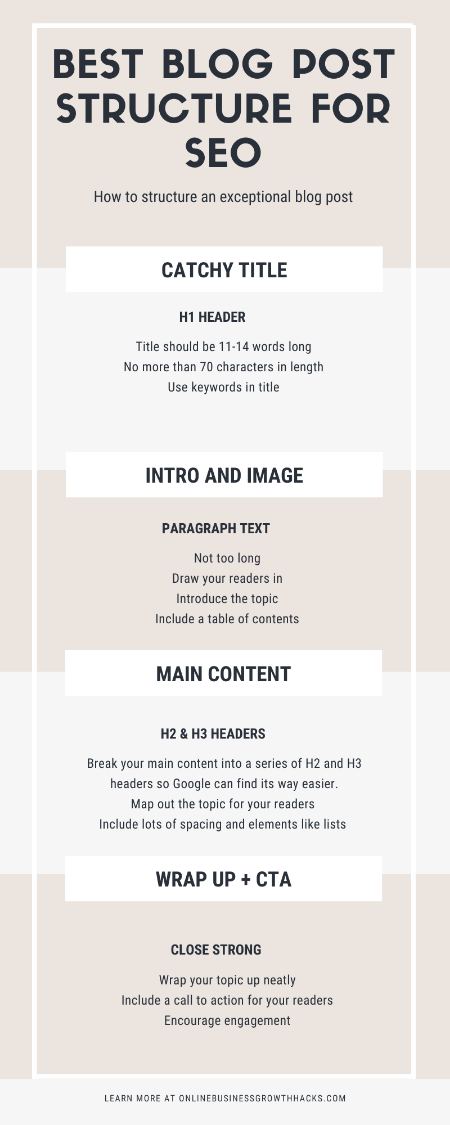
Google loves a good header or two! Great SEO means that your blog structure is broken down into a handful of easily readable and easily crawled sections. Headers help both the reader and Google make sense of your content.
The minimum I recommend are:
Title – The main topic of your post and how you will get your reader to click… this also has your keyword or key phrase in it
Subtitle – Optional – creates interest or intros the subject
H2 Header – Main header topics – I use bold for these as well
H3 Header– Sub headers within H2 sections where you want to tease out more info on a tip.
Writer's voice
It’s so, so important and I can’t emphasize this enough, that you find your unique voice.
Your readers will come to know your voice and know what to expect. It’s your brand. Your personality.
It’s what will set you apart from other salespeople.
Show your personality. Afterall, they are looking to hire someone they gel with!
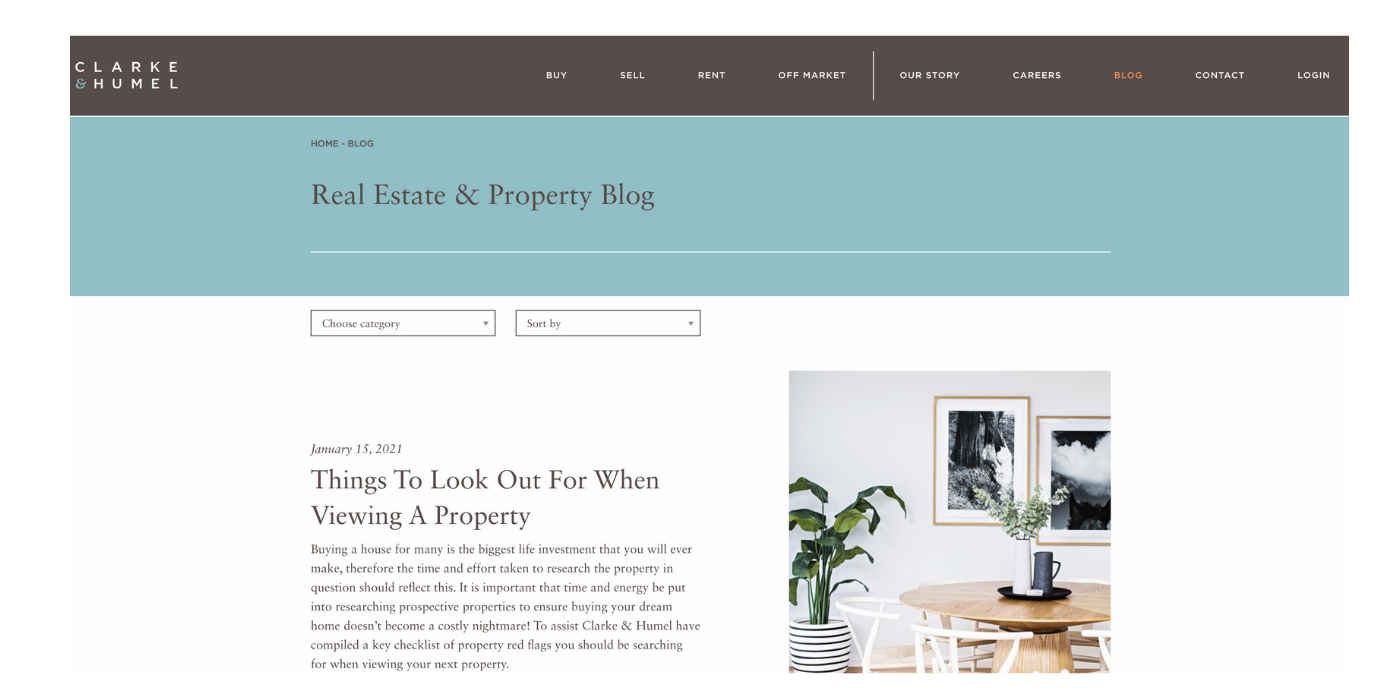
One of the absolute best examples of a real estate blog I've come across lately is Michael Clarke and Cherie Hunmel's blog.
Beautifully streamlined. On topic for homeowners. Lots of white space! Full of personal touches (personality!) and a really nice mix of topics.
Blog writing process
Research your keywords
First up you want to do a bit of research about what your ideal audience is looking for.
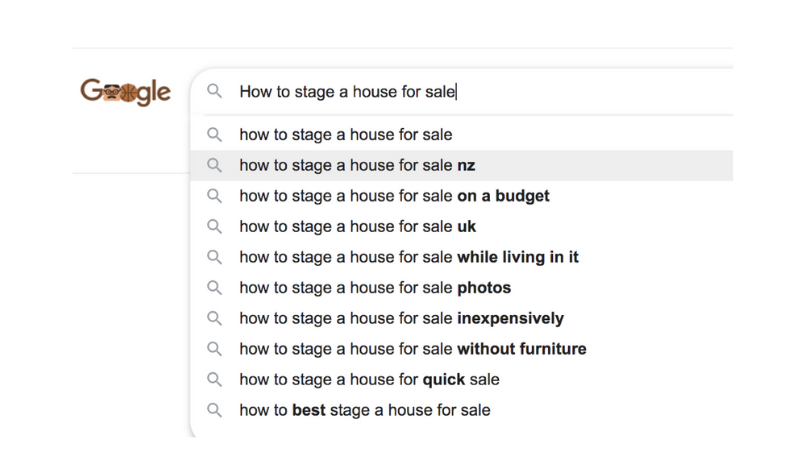
If you want to write about say, staging your home for sale… you can start by searching a free tool like UberSuggest or even Google or Pinterest with a few phrases that you think people might search for.
Like…
How do I stage my home?
Tips for presenting my home for sale
Best ways to stage my house
Then, look to see the words or phrases that surround these searches… you might find a particular niche or sub topic that better suits your brand and style.
When you type in your search phrase you’ll also get a list of recent searches that come up as you type.
This is SUPER HANDY!
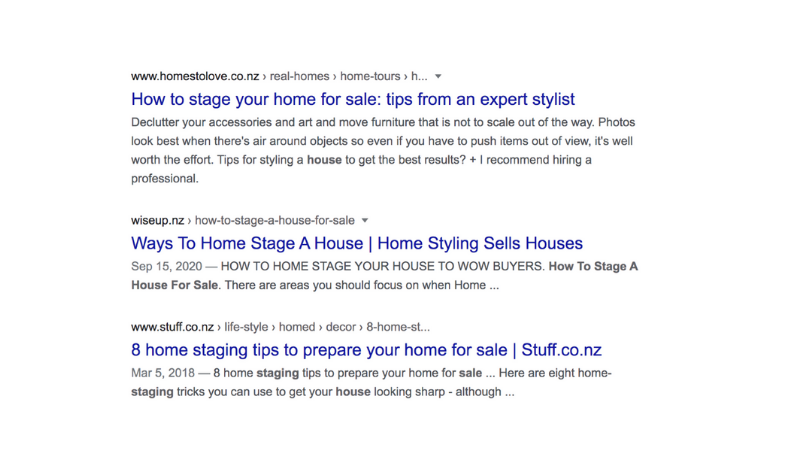
Also, at the bottom of the search page you’ll find related searches… pay attention to these!
All great info for your keyword research.
Pick your keywords and keep a list of alternative keyphrases – this will come in handy for promoting your blog post, especially if you use more than one keyphrase in your article.
Next, you want to map out your post.
Post Planning
- Title – This is what your reader will get enticed by. Must include your keyphrase.
- Intro – A few short paragraphs leading into what you’ll be talking about. Must also include the keyphrase.
- Table of contents – If your post has plenty of sections or sub headers it’s always a good idea for both the reader and Google to add in a table of contents.
- 3-5 Sections – With H2 headers – Sections include your main points and this is where you’ll break apart the topic. Within each section you might have lists, or H3 sub topics.
- Graphs and images – Make sure to add interest to your post by adding in a couple of interesting images or graphs. Property is all about data! And so you want to make sure you’re showing your potential clients that you are all about the info!
- Wrap up– Wrap up your post with a few sentences… make sure you include some sort of call to action or next step. For instance, in our example above... you might say something like … “Staging your home is a great way to make it appeal to a certain buyer, for more tips on getting your home ready for sale, grab my free 12 Steps to selling your property guide here”.
Write your draft in Google Docs or a similar program. Then cut and paste it into your blogging platform, whatever that may be. I love Wordpress.
Whew ! That's a lot to cover... but hopefully we have given you a wee insight into how content marketing, and in particular blog writing can give you a competitive edge when marketing your real estate brand online. If you want a more in depth step by step guide on how to start a blog, grab this free guide here.
Have you recently started your real estate blog?
We'd L💛 VE to see it!